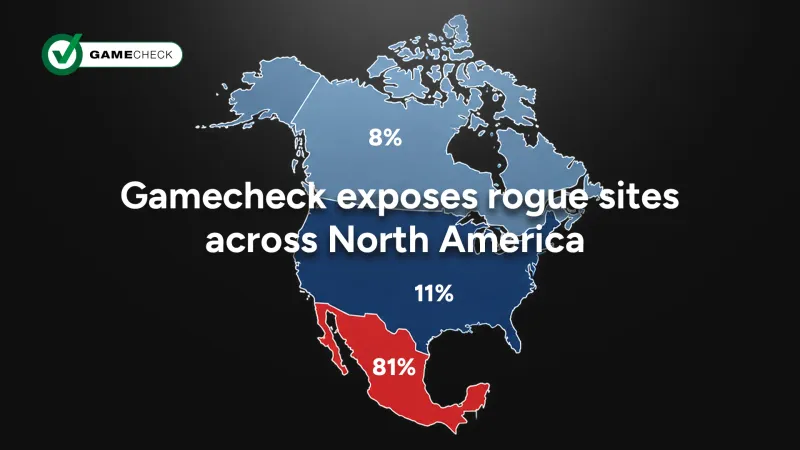
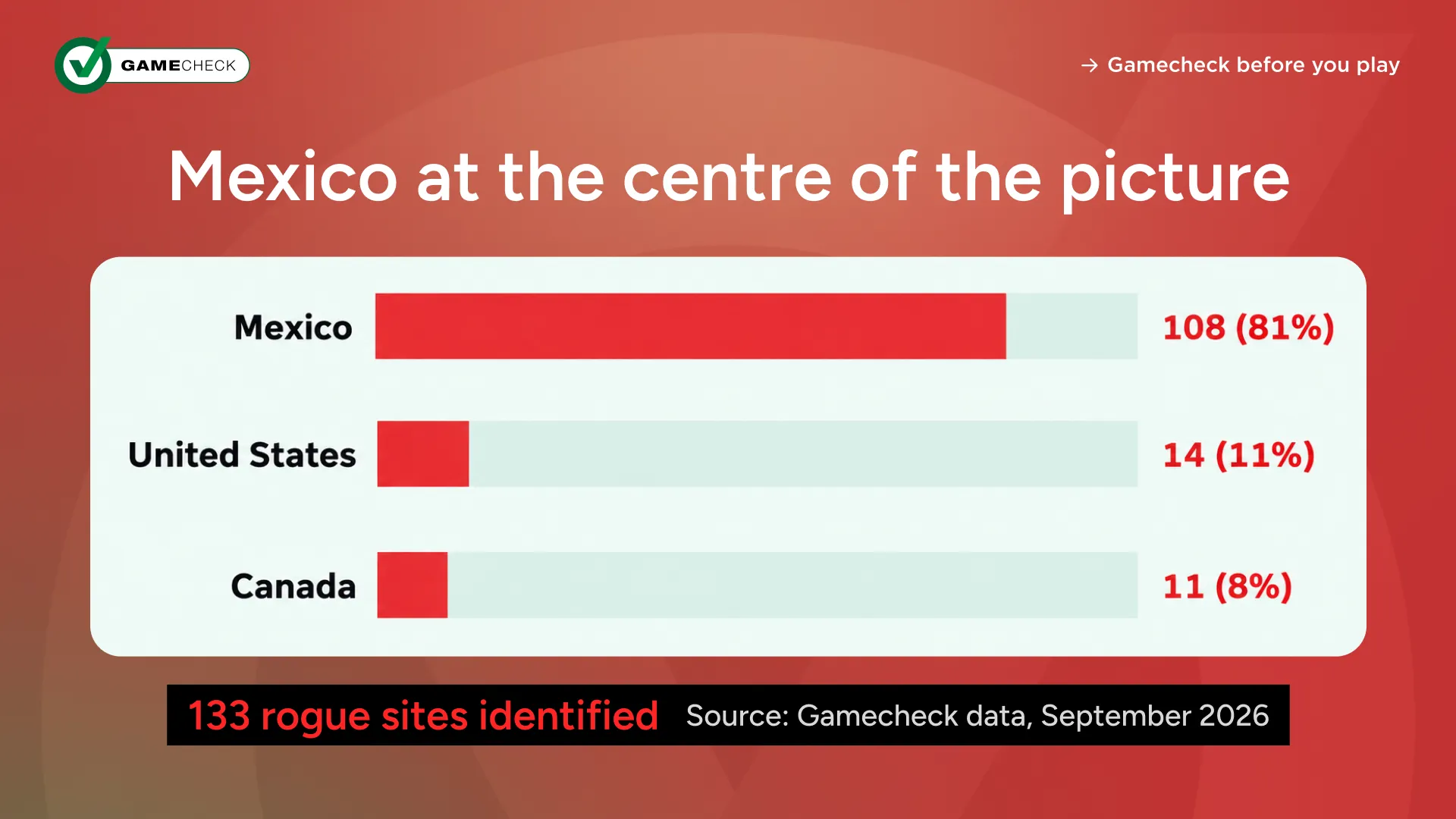
Gamecheck has identified 133 fake online casinos targeting players in North America. More than 100 of them, 81% of the total, target Mexico. Fourteen target the United States, 11%. Eleven target Canada, 8%. Together they form the latest group of fake online casinos identified by Gamecheck in the region, and each one now carries a Fake Games Detected status on the Gamecheck platform.
The finding will not surprise anyone watching the region closely. Where online casino gaming grows, rogue operators follow, and North America, with Mexico at its centre, is growing at pace. This investigation sets out who these operators are, how they present themselves to players, and what players can do to check an online casino before they deposit.
Each site below has been checked by Gamecheck and holds a Fake Games Detected status. Where a brand operates from more than one web address, each address is numbered separately.
Click any name to view its full Gamecheck profile.
Mexico, with an estimated eight million active players, has become one of the most closely watched online casino gaming markets in the Americas. When SiGMA launched its North American summit in September 2026, it chose Mexico City as the host, with Centro Banamex as the base, giving the industry a North American foothold with direct relevance to Spanish-speaking markets and companies operating across Latin America, the United States, and Canada.
That scale brings opportunity for real operators. It also brings cover for fake ones. A growing player base means more first-time players and more people meeting an online casino brand for the first time with nothing to compare it against. That is the environment rogue operators rely on.
The 108 Mexican sites in this investigation share recognisable habits. Many use brand names built to feel local. MXN777 Casino borrows the Mexican peso's currency code, while Mexplayr and Betrmexico fold the country into their names. 777SUERTE uses the Spanish word for luck, GANA7 and GANO take their names from the Spanish verb to win, and MiPremio promises the player their prize. Two sites open with TRAGAMONEDAS, the Spanish word for slot machines. AZTEC AGAMING reaches further back, drawing on the country's history for its identity.
Others lean on the look of a name players already know. Rollbitcasino, Betcsson and Stakekronx sit close to brands many players will recognise, and Lucky99 uses a web address that borrows another familiar name entirely. Caliente777 and one of the 3377 sites both build on the name of a brand Mexican players know well.
Familiarity lowers a player's guard, and a lowered guard is what these operators depend on.
A closer look at the list reveals a second pattern. Several brands appear more than once, each time under a different web address. OKCLUB and Okgame each operate from three separate addresses. GANA7, JUGA, MX37, SOLYA777, Tada7, 3377 and TUNG TUNG TUNG SLOTS each appear twice.
This is how rogue operators keep a brand alive. When one address is flagged or taken down, another is already running, carrying the same name, the same look and the same fake games. A player who recognises the brand has no reason to suspect the address has changed.
For players, the lesson is clear. A familiar name is not evidence that an online casino is real. The only reliable test is to check the site itself.
This is the reason Gamecheck attended the inaugural SiGMA North America in Mexico City earlier this month. The summit ran from 1 to 3 September 2026 at Centro Banamex and was set to welcome 4,000 delegates, 1,000 operators, more than 150 speakers and over 200 exhibitors and sponsors.
One of the sessions worth reflecting on was '48 Hours to Fallout: How iGaming Crises Unfold in Mexico & LATAM', featuring Rosa Ochoa, responsible for Business Development LATAM at Gamecheck. Sessions like this move the conversation away from abstract risk, towards something more useful for players: how quickly things can go wrong, and what that means for the choices they make every day.
A fake online casino is a crisis that develops quietly, one player and one deposit at a time, long before it reaches the headlines. Gamecheck's presence in Mexico City had a clear purpose: to put fake games on the agenda in the rooms where operators, suppliers and affiliates shape the region's future.
The numbers outside Mexico are smaller, but the method is the same.
In the United States, Bucks Jet and Coins Bucks lean on everyday slang for money, and Sweepsblast borrows the language of sweepstakes-style gaming. The rest, including Luxora, Wazbee and Vexgamb, are designed to look ordinary. These are the kind of names a player might scroll past in a search result or click on in an advert without a second thought.
In Canada, WIN MACHANCE borrows the French for "my luck", a name aimed squarely at French-speaking players. Most of the others, from Casino Hermes and GoldRiderCasino to The RED TOUCAN and Bullspins, carry names that give nothing away.
Where the Mexican sites lean heavily on local identity, many of these lean on anonymity. For a fake online casino, looking unremarkable is its own form of disguise. A plain, generic brand name tells a player nothing about whether the games behind it are real.
Players in Mexico, the United States and Canada do not need specialist knowledge to protect themselves. Gamecheck gathers evidence and checks a selection of games in collaboration with the original game providers, who are best placed to confirm whether the games are real or fake. To date, Gamecheck has monitored 69,846 online casino sites, completed more than 496,000 checks and identified over 10,000 fake online casinos worldwide.
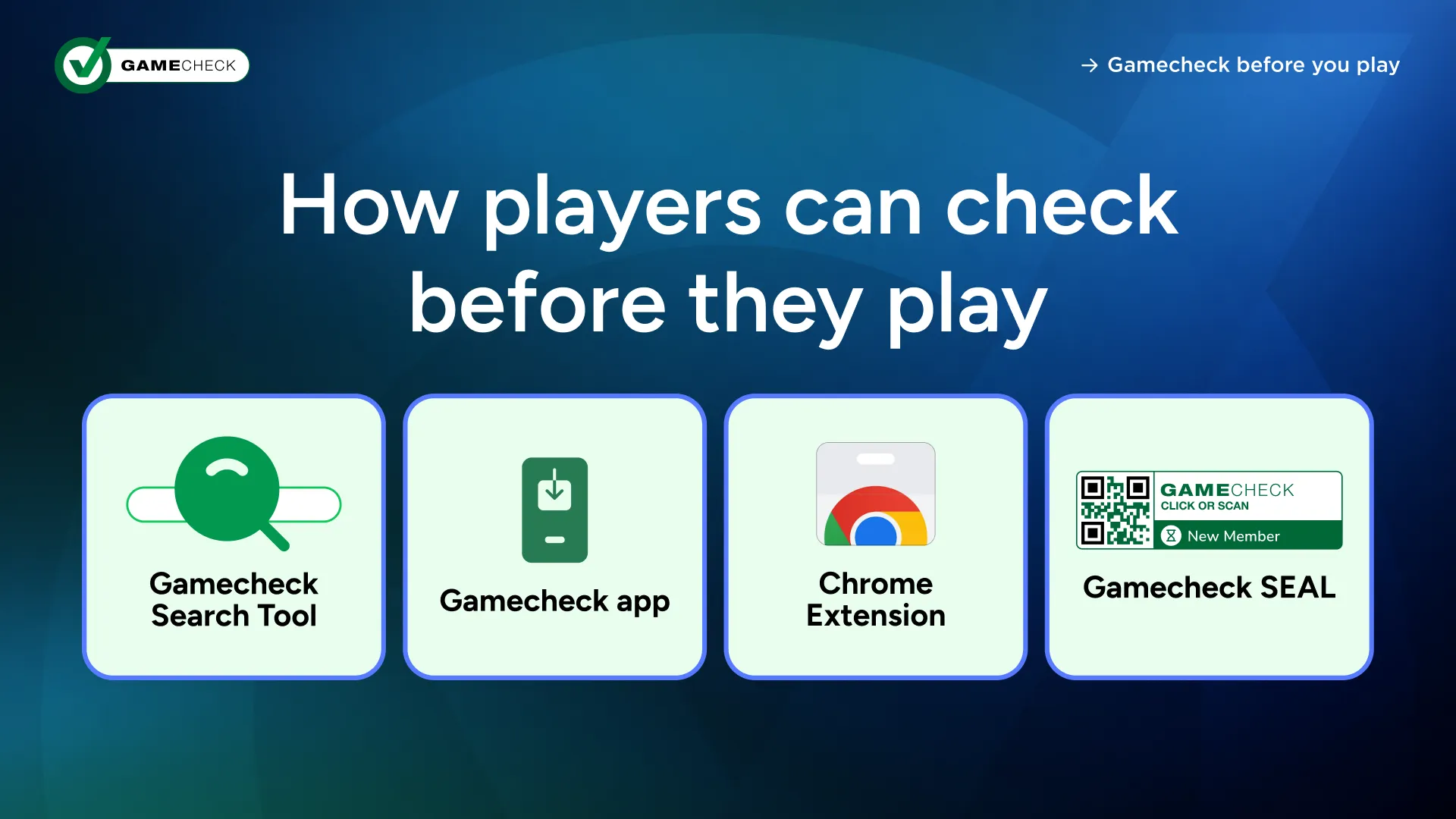
Gamecheck's free tools make it possible to check an online casino in seconds. The Search Tool shows the status of any online casino Gamecheck has checked. The Gamecheck app brings the same checks to iOS and Android, and the Gamecheck Chrome Extension lets players check online casinos as they browse.
Operators that display the Gamecheck SEAL have had their games checked with the original game providers, giving players a clear signal before they sign up. Anyone who suspects an online casino of offering fake games can report it directly through Gamecheck's request form.
The 133 sites in this investigation are a snapshot of a region where online casino gaming is growing faster than many players' ability to tell real from fake. Mexico carries the heaviest share by some distance, but the same tactics are already visible in the United States and Canada.
Familiar names, local references, borrowed brands and recycled web addresses are all used to earn trust the games themselves have not earned. Each of these operators offers games that were never real to begin with.
Download the free Gamecheck app to check any online casino before you play.
Published On: Oct 11, 2026
Updated On: Nov 03, 2026
How many fake online casinos has Gamecheck identified in North America?
Gamecheck has identified 133 fake online casinos targeting players in North America. Of these, 108 target Mexico (81%), 14 target the United States (11%) and 11 target Canada (8%). Each one now has a Fake Games Detected status on the Gamecheck platform.
How do fake online casinos try to win players' trust?
Many use brand names designed to feel local or familiar, such as Spanish words for luck, prizes or winning, currency codes, or names that sit close to well-known brands. Others choose plain, generic names that give nothing away. Several brands also run from more than one web address, so when one address is flagged, another is already running with the same name, look and fake games. A familiar name is never proof that an online casino is real.
How can I check whether an online casino offers real games?
Use Gamecheck's free tools before you play. The Search Tool shows the status of any online casino Gamecheck has checked, the Gamecheck app brings the same checks to iOS and Android, and the Gamecheck Chrome Extension lets you check online casinos as you browse. You can also look for the Gamecheck SEAL, shown by operators whose games have been checked with the original game providers. If you suspect an online casino of offering fake games, you can report it through Gamecheck's request form.
Can a player spot a fake game?
Not reliably. The copies are sophisticated enough that neither an untrained nor a trained eye can tell from playing. The only sign is winning less often than expected, which costs the player money to work out.
Can a fake games status change over time?
Yes. Gamecheck continues monitoring flagged sites, and a status can change if the issues identified are addressed by the operators, and fake games are removed.
Join operators using Gamecheck SEAL to protect players and grow credibility.