-1600x900.webp)

Gamecheck's investigation into fake online casino games in Brazil continues. Of the 5000 fake online casinos identified across the country, this exposé series is publishing 500 in full, 50 sites at a time. This is part eight of ten, and the pattern has not changed: polished branding, familiar-looking slot libraries, and no relationship with the original game providers whose games they claim to offer.
Gamecheck checked a further batch of Brazil-facing platforms with the original game providers. Below are the next 50 sites confirmed to be operating fake games, listed alphabetically. Only the Gamecheck profile links are clickable, in line with our policy of never linking to a fake casino directly.
Two entries on this list are part of a wider pattern worth flagging. 2Popflu shares its brand name, "POPFLU," with 1Popflu, a separate site identified earlier in this series. The two run on different domains and have their own individual Gamecheck profiles, but the shared naming convention is typical of how these operators work: spinning up numbered variants of the same brand so that if one domain is blocked or exposed, another is ready to take its place. It is a pattern that shows up repeatedly across this investigation, and it is one more reason a domain being new does not mean it is unconnected to a site already confirmed as fake.
Each of these sites was checked with the original game providers. None of them could confirm the games in operation as real. Players who have accounts on any of the above should treat their balances with caution and stop depositing immediately.
Gamecheck does not run these games itself, and it does not test every version of every title available in Brazil. Instead, evidence is gathered from each site under review, and that evidence is checked directly with the original game providers whose software the site claims to run. This distinction matters. A screenshot, an on-screen pay-out percentage, or a familiar-looking game title does not tell players anything reliable on its own, since all three can be copied by anyone with basic development skills. Only the provider can confirm whether the specific software running on a specific domain is the one they built, and whether it has been altered in any way. When a provider cannot confirm this, the site is added to Gamecheck's list of online casinos offering fake games.

Brazil's regulated online casino market is at an unusual crossroads, and it explains why fake operators keep finding room to work. Since Law No. 14,790 came into force at the start of last year, only operators licensed by the Secretariat of Prizes and Betting may legally offer betting services in the country, and the regulated side of the market has grown quickly: Brazil now counts 78 licensed operators running 138 brands.
That growth has not settled the politics. Brazil's government is currently pushing a bill, No. 2,258 of 2026, that would ban online casino games from the regulated market entirely while keeping fixed-odds sports betting in place. The administration is aiming to pass it before October's elections, pointing to links between certain widely-played slot titles and rising household debt. Alongside this, regulators are drafting new product design rules similar to those already used in parts of Europe, including restrictions on in-game tutorials and statistics, and a ban on operators pre-selecting deposit or betting amounts.
A wider look at the market's first year of regulation found much the same picture: operators adjusting to identity checks, and a persistent gap between how the regulated market is meant to work and how much of the market still sits outside it. That gap is where fake operators live.
The regulated side of the market may be growing, but so is the problem sitting alongside it.
Current estimates put illegal operators at between 41% and 51% of the total online betting and casino market, despite Brazil's national telecoms operator blocking more than 18,000 illegal betting sites this year. Industry lawyers have questioned how much this achieves on its own, since blocking a site's address is widely seen as one of the weaker enforcement tools available.
The more consequential shift has been cooperation between regulators and Brazil's Central Bank, using the traceability of the Pix payment system to target the financial access that keeps unlicensed operators running rather than chasing domains one at a time. A further measure under debate, a proposed tax on player deposits, has drawn warnings that pushing up the cost of playing on regulated platforms could send channelisation below 20%, sending players back toward the unlicensed sites regulation was meant to move them away from.
This is the gap Gamecheck exists to close. Blocking a domain does not stop it reappearing under a new name days later. Checking whether the games on it are real does.
Three things make Brazil a persistent target:
None of this changes what Gamecheck does. We check games with the providers who made them. If a provider cannot confirm a game as real, it goes on the list.
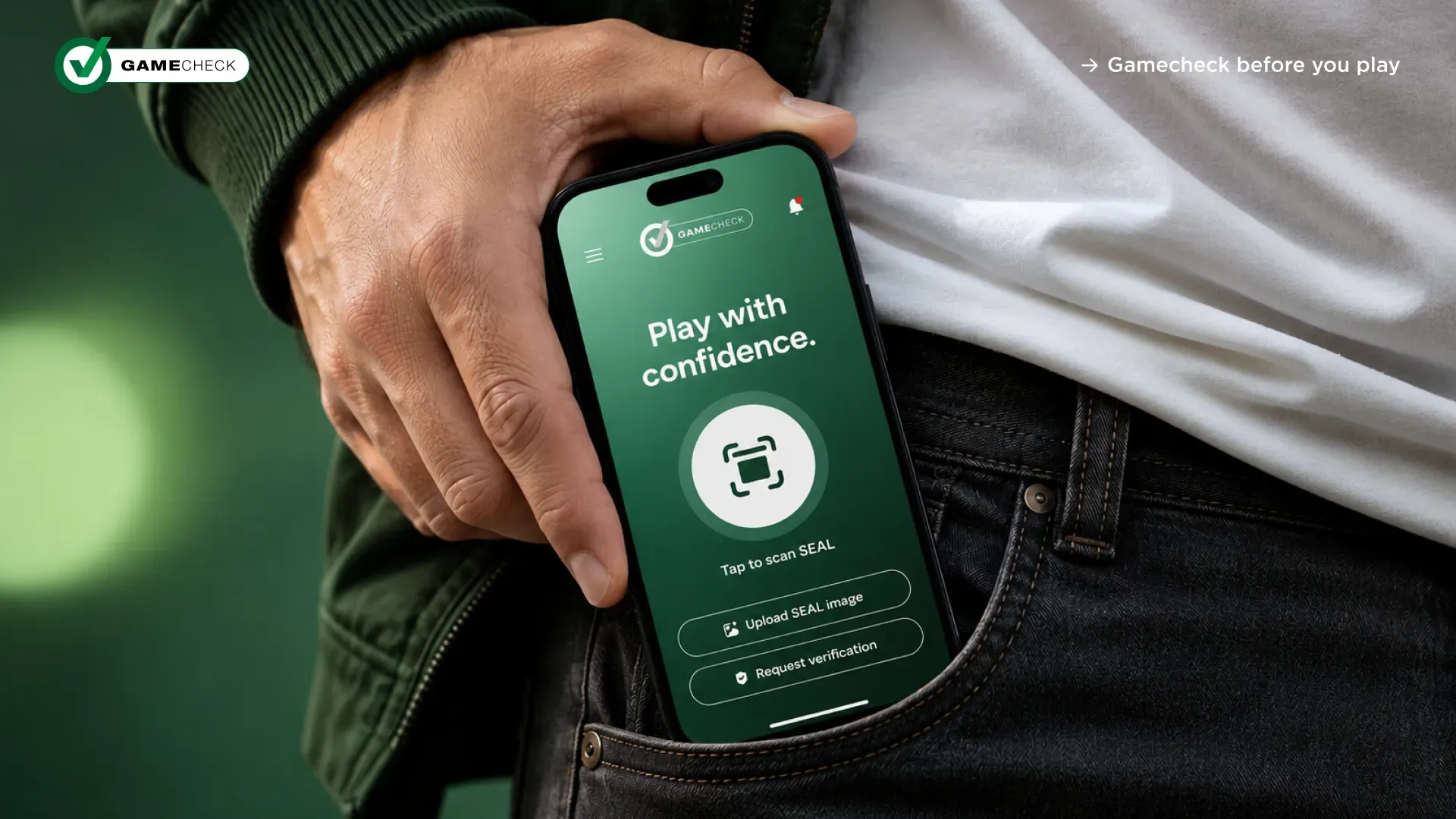
Players do not need to wait for the next instalment of this series to check a site for themselves. The free Gamecheck search tool and the Gamecheck app let anyone check an online casino before they play, using the same provider-confirmed data behind this exposé series. Operators who want to show players their games are real can apply for the Gamecheck SEAL, which links directly to their domain and can be scanned in-app.
Fifty more sites identified, fifty more confirmed as fake. Two parts remain in this series, and the picture in Brazil is not getting simpler: more licensed operators, more political pressure on the regulated market, and more unlicensed operators finding it easy to blend in.
Follow the Brazil fake casino exposé series to see which sites are exposed next, and download the free Gamecheck app to check any online casino before you play.
Published On: Sep 07, 2026
Join operators using Gamecheck SEAL to protect players and grow credibility.