-800x450.webp)
Most online casino sessions today do not start at a desktop. They start on a phone, often in a spare five minutes between other things, on a screen a fraction of the size of a laptop display. That change in how players access online casino gaming has made it harder to spot a fake slot before it is too late.
Industry estimates put mobile devices at anywhere between 68 and 85 per cent of all online casino traffic worldwide, depending on the market and the study. In the US alone, mobile now accounts for more than 80 per cent of online gambling revenue, and that share keeps growing year on year. Around four in five online casino players list their phone as their main device, not their laptop or desktop computer.
This is not a passing trend. It reflects how people actually want to play: quickly, casually, and without needing to sit down at a computer first. But that convenience comes with a cost that is rarely discussed. The smaller the screen, the fewer details a player sees before they tap deposit.
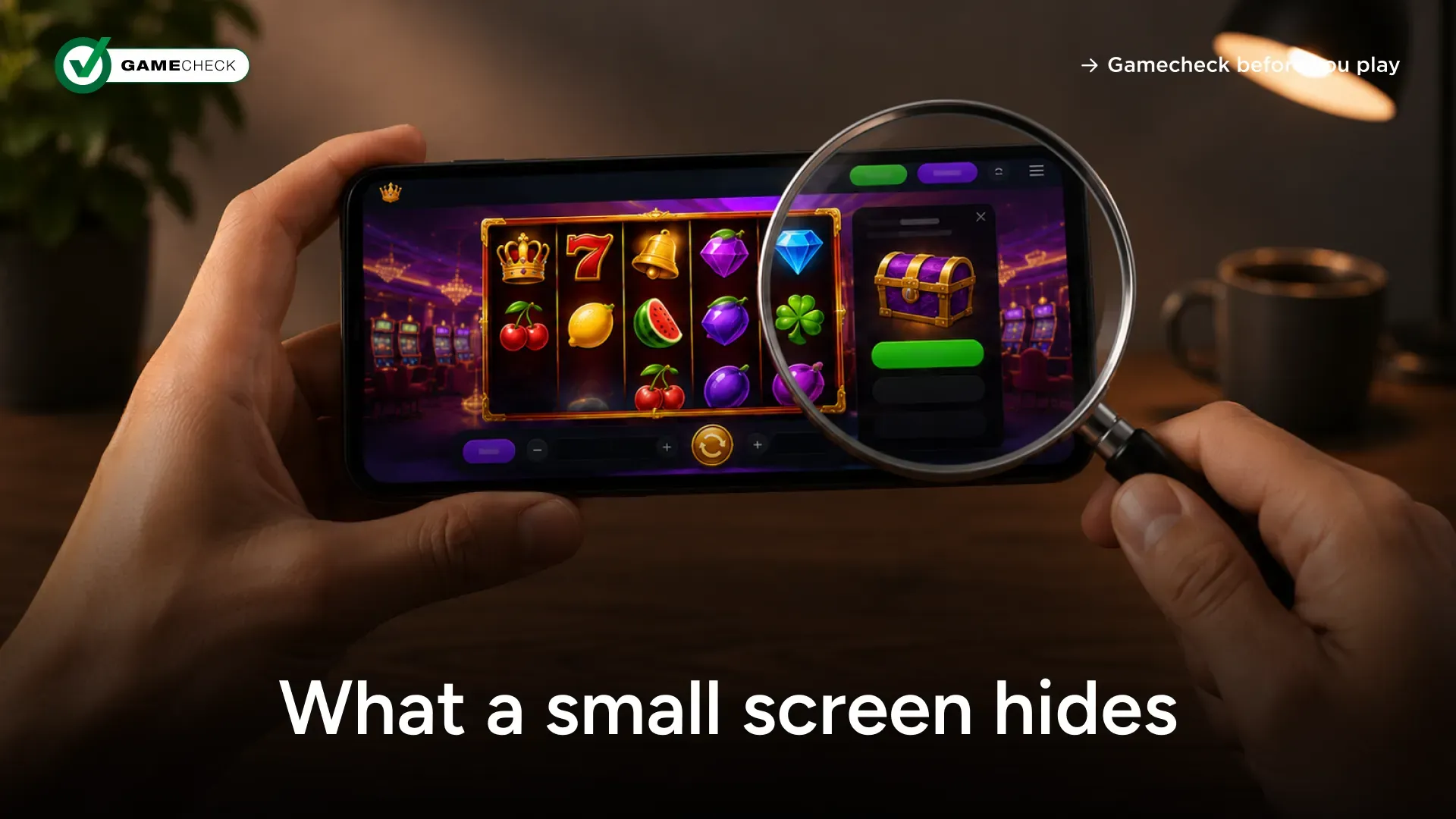
On a desktop, a player checking a new online casino can see the full domain in the address bar, a footer packed with company details, and enough visual space to compare graphics, layout, and structure side by side with another tab. On mobile, most of that is compressed, hidden behind menus, or cut off entirely.
Address bars on mobile browsers often shorten the domain. Footer information, where company registration details and game provider names usually sit, is pushed several scrolls down, and most players never reach it. Pop-up bonus offers take up a much larger share of a small screen, which means the promotional layer of a site dominates the experience while the structural signals that matter most stay out of view.
None of this makes mobile online casino gaming unsafe on its own. It simply means the details a careful player would normally notice on a larger screen are easier to miss on a smaller one.
Fake online casinos benefit from that gap. A rushed, mobile-first sign-up flow with a slick loading screen and a big welcome bonus does not need much beyond appearance, since the visual weight of the page does most of the persuading before a player thinks to look further.
Rogue operators have adapted quickly to this shift in player behaviour. Many fake sites are now built mobile-first rather than mobile-friendly, meaning the entire user journey, from landing page to deposit screen, is designed around a phone rather than adapted from a desktop version afterwards. Clean layouts, fast load times, and large tappable buttons are not accidents. They are deliberate choices that make a fake site feel just as smooth, and sometimes smoother, than a real one.
A fake slot game can look identical to the original on any screen size, since graphics, animations, and even displayed pay-out percentages can be copied or altered. The only way to know whether a game is real is to check where it comes from, not how it looks while you play it.
The good news is that checking a site does not require switching to a desktop. Gamecheck's free tools are built to work wherever a player already is.
The Gamecheck app gives players the same core functionality as the desktop experience, purpose-built for mobile. Players type or paste a domain into the Gamecheck search tool from within the app, and see whether real games pr fake games comes back, all without leaving their phone.
The Gamecheck Chrome Extension, by contrast, is a browser tool built for desktop use. It runs the Gamecheck search tool automatically in the background as a player browses on a computer, so there's no need to copy and paste a URL. It's worth knowing this distinction, since a player expecting the same automatic check in a mobile browser will not find it there. For checks on the go, the Gamecheck search tool through the app, or directly at Gamecheck.com, is the right starting point.
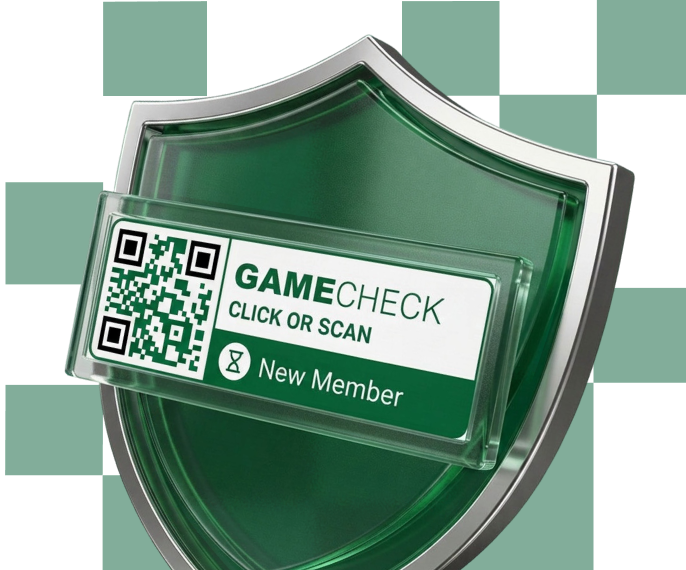
The Gamecheck SEAL adds another layer of protection that works well on mobile. Players can scan the SEAL's QR code through the Gamecheck app, which pulls up the domain-linked record instantly. This is one area where mobile is actually the more natural fit, since scanning a code with a phone camera takes seconds and confirms the SEAL belongs to that specific site rather than being lifted from somewhere else.
Before depositing on a new site from your phone:

Beyond the design of the sites themselves, the way players actually use their phones adds another layer to the problem. Sessions on mobile tend to be shorter and more frequent than desktop sessions, often squeezed into commutes, breaks, or the last few minutes before sleep. That pace does not leave much room for the kind of careful reading that spotting a fake site usually needs.
A player moving between a messaging app, a social feed, and an online casino tab in the space of a minute is not building the same mental picture of a site that someone browsing slowly on a desktop would. Fake operators do not need players to be careless. They only need the pace of mobile use to work in their favour, and for the most part, it already does.
Younger players, who make up a fast-growing share of new online casino sign-ups, are more likely to have started their online casino gaming on a phone rather than moving to mobile from desktop. For this group, a mobile-first fake site does not look unusual or stripped down. It looks like every other app they use, which removes one more visual cue that something might be off.
For online casino operators offering real games, the growing dominance of mobile play is an opportunity as much as a challenge. Displaying the Gamecheck SEAL matters more, not less, in a mobile-first environment, since it gives players a quick, checkable signal at exactly the point in the journey where other details are easiest to overlook. Operators building genuinely mobile-first platforms have a chance to make that trust signal part of the experience itself, rather than something buried in a footer nobody scrolls to.
Operators also have a role to play in making the Gamecheck search tool easier to reach from a mobile session, whether through a visible link in a mobile menu or a mention alongside the Gamecheck SEAL itself. The easier it is for a player to check a site mid-session, the less the small screen works against them.
As mobile continues to account for the vast majority of online casino sessions, the sites that make it easy to check their games are the ones building a real long-term relationship with their players.
Whichever device you play on, check before you deposit.
Download the free Gamecheck app to see whether an online casino is offering real games before you play.
Published On: Sep 17, 2026
Updated On: Sep 18, 2026
Join operators using Gamecheck SEAL to protect players and grow credibility.