What SBC Summit Malta tells us about fair play
7 min read-20260413-160438-800x450.webp)
Three days. Six thousand professionals. Dozens of sessions on the future of iGaming. SBC Summit Malta wrapped up on Thursday 30 April, and the conclusion is clear: fair play is no longer a footnote in industry conversations. It is becoming a condition of doing business. This shift matters for anyone who has ever wondered whether the game they are playing is actually what it claims to be. More operators are now aware of the issue of fake games and are taking practical steps to address it, and that is a positive development for the whole industry.
Why fair play belongs at a business conference
SBC Summit Malta is, at its core, a commercial event. Operators, game providers, affiliates, and payment companies gather every year in St Julian's to build relationships and close deals. So why does player protection belong in that room? Because the two are inseparable.
An operator whose games cannot be trusted is not operating a sustainable business. A platform where players feel deceived does not retain customers, it loses them, usually permanently and often publicly. The industry has begun to understand this in a way it perhaps did not five years ago. Trust is not a soft, optional extra. It is the product.
That is the context in which conversations about fake games, player verification tools, and game authenticity have started to feel less like regulatory obligations and more like business priorities. Which is exactly where they need to be.
The conversation that can't be ignored
On Wednesday 29 April, James Elliott, Founder of Gamecheck, took the stage at the Risk, Regulation & Resilience track to speak about the fake game network - how it operates, the risks it poses, and how verification technology is helping restore trust.
The title of the session was direct: "The Dark Side of Gaming: Exposing the Fake Game Network." And the case James made was equally direct. Fake games are not a fringe problem. They are not limited to obscure corners of the internet. They are present on sites that look entirely professional, polished design, familiar game titles, convincing promotions. The difference sits behind the interface, where the game's origin, delivery, and behaviour cannot be seen by the player.
For anyone working in player protection, this is not a new concern. But hearing it addressed on a main conference stage, in a room full of operators and providers who are making decisions about how they build and run their platforms, felt significant. The fake game problem is no longer something the industry can set aside for someone else to solve.
What operators have understood
One of the most consistent themes across the summit was reputation. Whether the conversation was about marketing, compliance, or technology, it kept returning to the same underlying question: how can operators build a platform that players trust? The answer, increasingly, is by being able to demonstrate something rather than simply assert it.
An online casino can claim its games are real. But in a market where fake games exist, that claim on its own carries limited weight with an informed player. What carries weight is evidence - a visible, verifiable signal that the games on a platform have been checked.
How Gamecheck can help
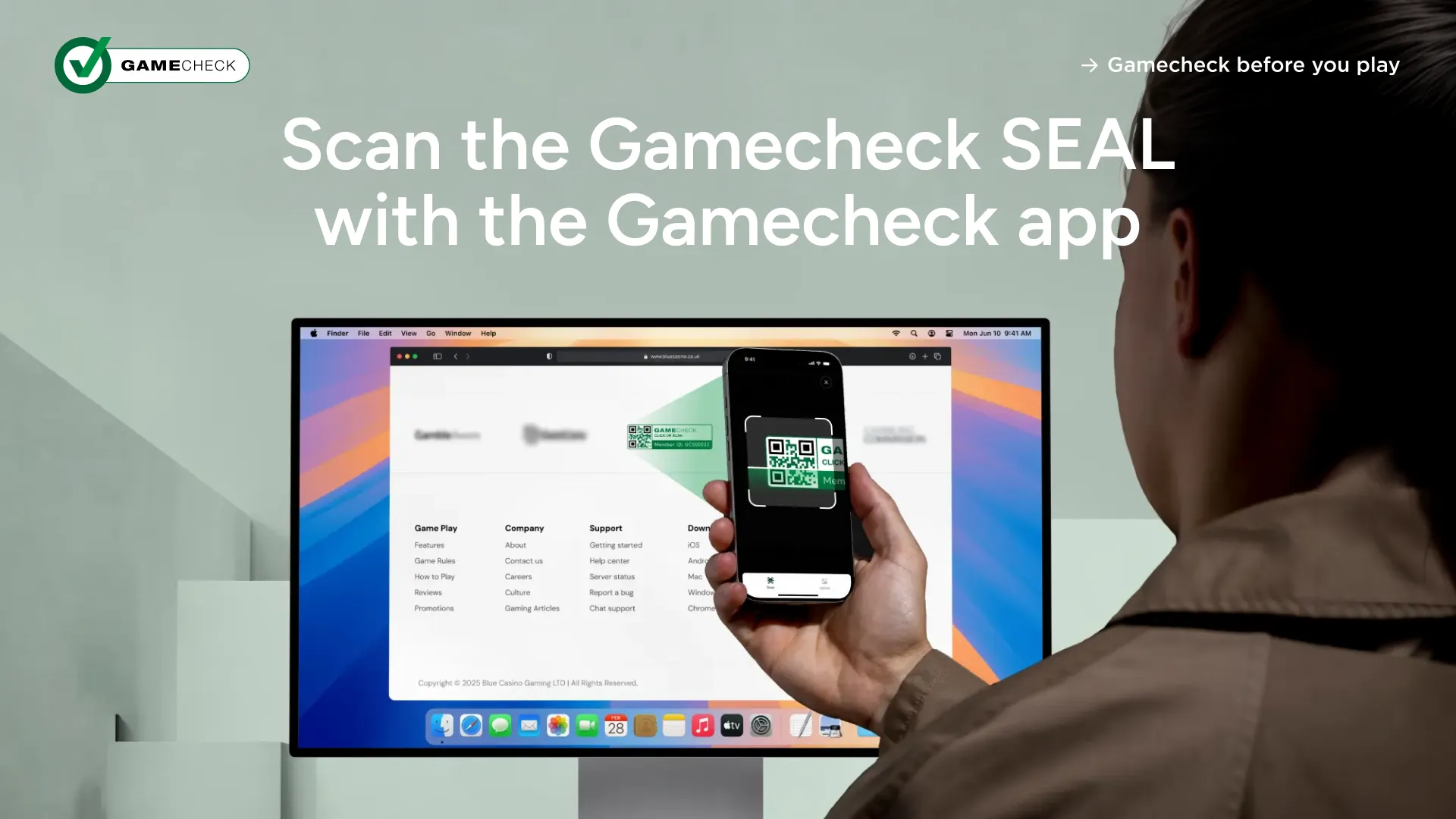
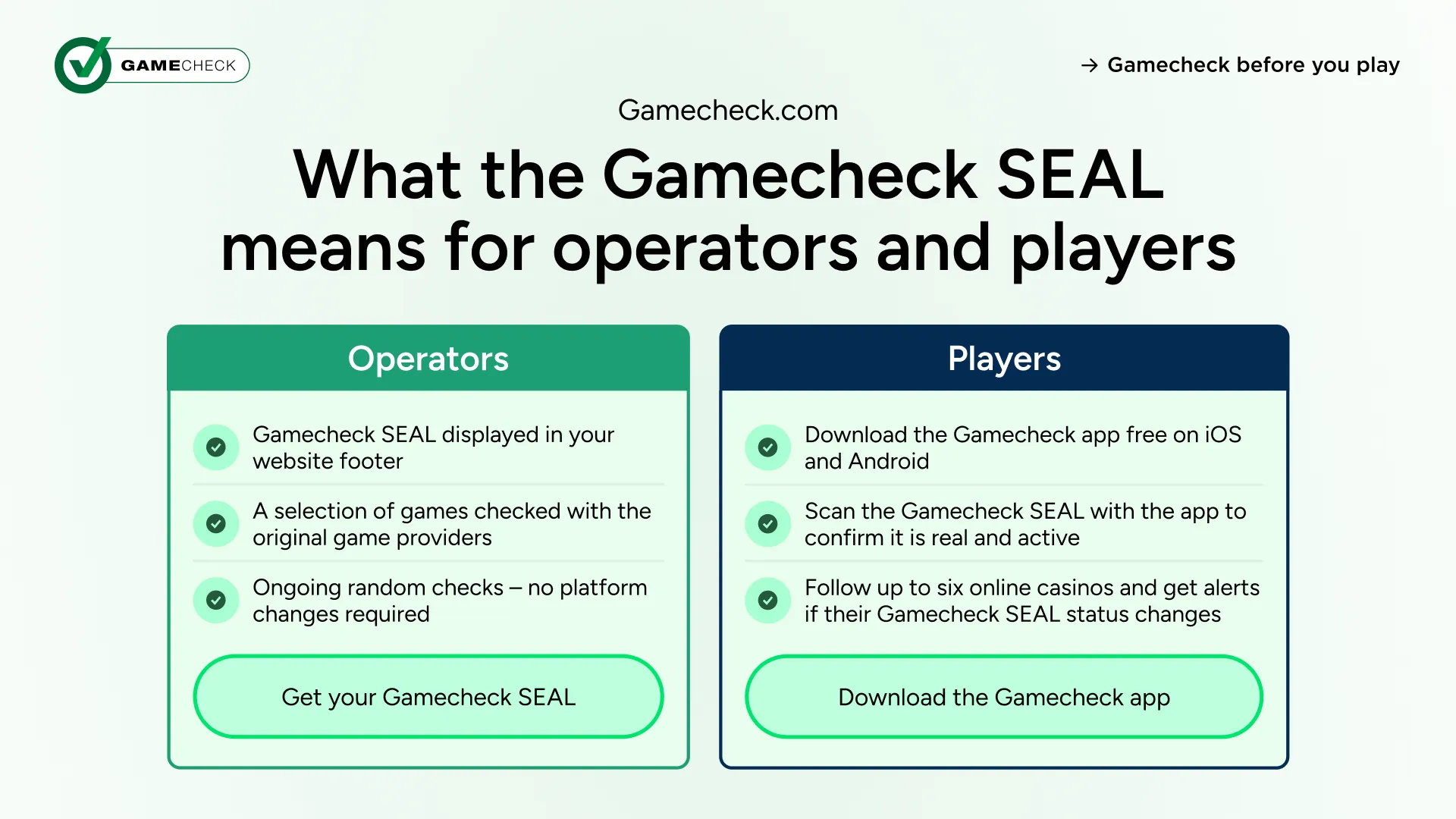
The Gamecheck SEAL gives operators exactly that. Displayed in the footer of an operator's website, it shows players that a selection of games on that platform has been checked and verified in collaboration with the original game providers. That collaboration between Gamecheck, the operator, and the game providers, is central to how the process works. Fair play is not something Gamecheck imposes. It is something the industry builds together through cooperation, communication, and a shared commitment to transparency.
The Gamecheck SEAL is linked to a specific domain and can be scanned through the Gamecheck app, giving players a domain-specific result that cannot be manipulated. Checks are carried out periodically and at random, ensuring that casinos displaying the Gamecheck SEAL maintain integrity and transparency over time. It builds player confidence, supports brand credibility, and requires no platform changes or complex integrations.
Operators who invest in the Gamecheck SEAL are making a competitive decision. In a market where players have more options than ever, the platforms that can demonstrate fair play have a meaningful advantage over those that simply claim it.
Key takeaways from SBC Summit Malta 2026
Here are the conclusions our three days in Malta left us with.
Fair play is a business priority, not just a compliance requirement. Operators at SBC Malta were not discussing player protection because they were told to. They were discussing it because they understand that a platform players trust is a platform players return to. That is a meaningful change in how the conversation is framed.
Fake games are acknowledged as a serious, industry-wide problem. The session at the Risk, Regulation & Resilience stage was not a fringe conversation. It was a direct, evidence-based account of how fake game networks operate and what the industry can do about it. The fact that this conversation is happening in main conference spaces is significant.
Verification tools are becoming part of the operator toolkit. The Gamecheck SEAL is not the only tool operators are thinking about, but it addresses something specific that other tools do not: the authenticity of the games themselves. In a market where game titles can be copied and interfaces can be imitated, operator-level verification matters.
Players are more aware than they were, and expect more. The conversations at Booth B76 reflected a growing expectation from players that they should be able to check what they are playing. Awareness of fake games is growing, and so is the demand for tools that address this.
What comes next
SBC Summit Malta 2026 was a beginning, not a destination. The conversations that started on the exhibition floor need to continue, and they need to move from intention to action.
For operators, that next step is the Gamecheck SEAL. It is a straightforward, practical way to show players that fair play is built into your platform, not claimed, but demonstrated.
For players, download the Gamecheck app free on iOS and Android and run a check on any online casino you are considering. If an online casino displays the Gamecheck SEAL in the footer of its site, scan it through the Gamecheck app to confirm it is a real Gamecheck SEAL.
Fair play can be checked. And now, more than ever, the tools to check it exist.
Operators: visit Gamecheck to learn more about the Gamecheck SEAL.
Players: download the Gamecheck app for free and scan the Gamecheck SEAL.
To find out more about where the future of fair play is heading, read our LinkedIn Industry Insights interview with SBC CEO & Founder Rasmus Sojmark: The Future of Fair Play.